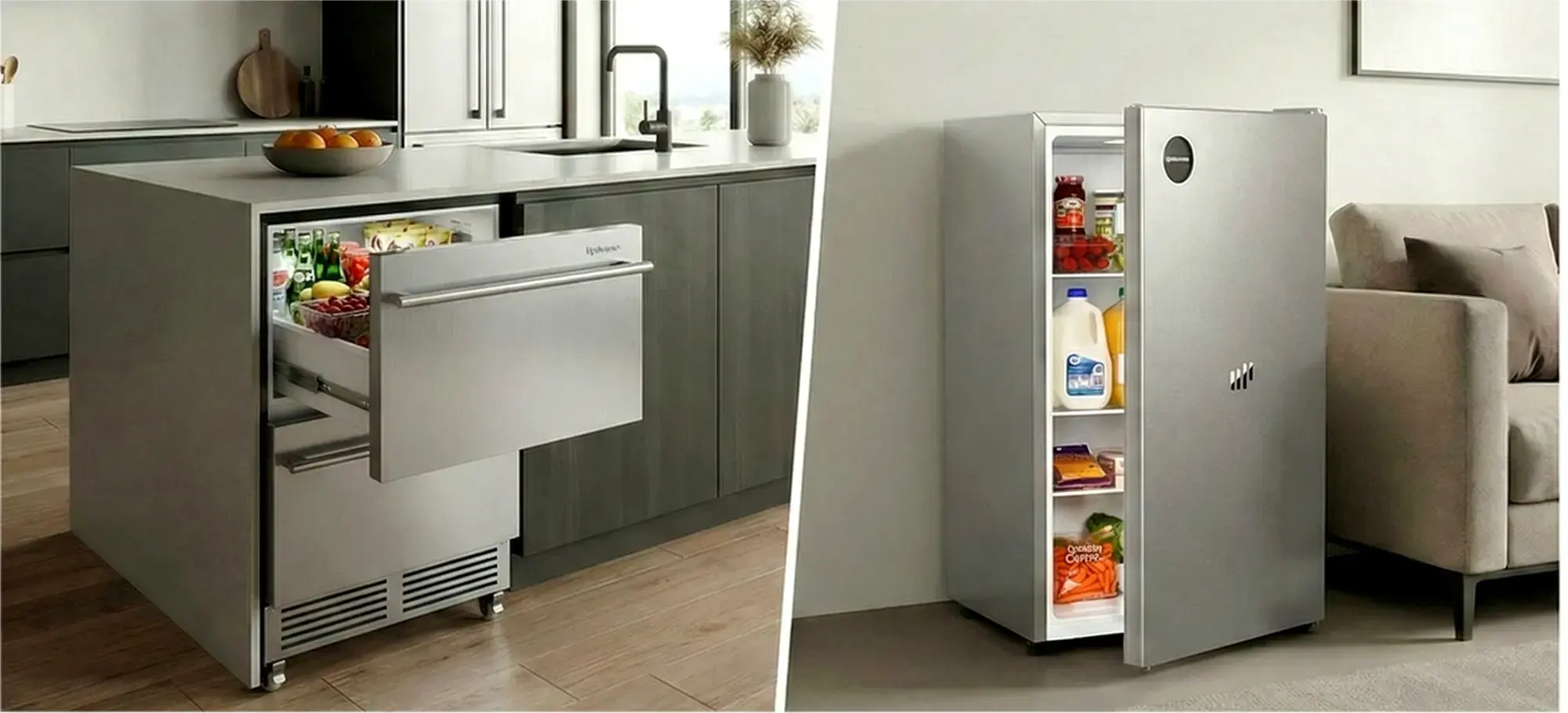
As energy costs rise and kitchen design evolves, many homeowners are asking:
are drawer refrigerators actually energy efficient, or just a design upgrade?
The short answer is yes — but the reasons go beyond simple wattage.
How Much Power Does a Drawer Refrigerator Use?
Most drawer refrigerators operate within:
- 100–250 watts (running power)
- Lower startup surge compared to full-size refrigerators
Compared to traditional models:
- Full-size refrigerator: 400–800W
- Mini fridge: 50–150W
👉 This places drawer refrigerators in a balanced efficiency range, combining moderate power use with better energy retention.
What Makes Drawer Refrigerators Energy Efficient?
Energy efficiency isn’t just about wattage — it’s about how effectively that energy is used.
1. Reduced Cold Air Loss
Traditional refrigerators lose a large amount of cold air when the door opens.
Drawer systems minimize this by limiting exposure.
2. Smaller Cooling Zones
Instead of cooling a large space, drawer refrigerators focus on targeted compartments, requiring less energy overall.
3. Better Insulation and Sealing
Built-in designs typically feature tighter seals, helping maintain stable temperatures.
4. Shorter Cooling Cycles
Because of their size, they reach target temperatures faster and cycle less aggressively.
Real-World Energy Efficiency vs Wattage
A common misconception is:
❌ Lower wattage = always more efficient
But in practice:
- Mini fridges may use less power per hour
- BUT lose efficiency due to poor insulation and frequent cycling
👉 Drawer refrigerators often achieve better real-world efficiency, especially in daily-use environments like kitchens.
When Are Drawer Refrigerators the Most Efficient?
Drawer refrigerators perform best in:
✔ High-frequency access areas
- Kitchen islands
- Cooking zones
✔ Secondary refrigeration setups
- Beverage storage
- Snack drawers
✔ Design-focused kitchens
- Built-in layouts reduce wasted space and airflow gaps
Are Drawer Refrigerators More Efficient Than Full-Size Fridges?
Yes — in most cases.
- Smaller volume = less energy required
- Less air exchange = lower energy loss
👉 However, they are not designed to fully replace a main refrigerator.
Instead, they function best as a:
- supplemental cooling solution
- efficiency upgrade for specific use cases
Are Drawer Refrigerators Worth It for Energy Savings?
If your goal is purely lowest electricity cost, a mini fridge may win on paper.
But if you want:
- Better efficiency in daily use
- Improved kitchen workflow
- Modern built-in design
👉 Then a drawer refrigerator offers better long-term value.
How to Maximize Energy Efficiency
No matter which type you choose:
- Avoid frequent opening
- Keep airflow space behind the unit
- Don’t overload compartments
- Maintain consistent temperature settings
👉 Choosing the right appliance type is just as important as usage habits.
FAQ
Do drawer refrigerators use less electricity?
Yes, they generally use less electricity than full-size refrigerators due to smaller capacity and reduced air loss.
Are drawer refrigerators cheaper to run?
In many cases, yes — especially when used as a secondary refrigerator.
Can a drawer refrigerator replace a regular fridge?
Not completely. It works best as a supplemental or specialized cooling solution.
What is the most energy-efficient refrigerator type?
Compact and specialized units like drawer refrigerators and mini fridges are typically the most efficient.
Explore More
- 👉 How Many Watts Does a Refrigerator Draw?
- 👉 Built-In vs Freestanding Refrigerator: Which One Is Right for You?
- 👉 What Is a Built-In Refrigerator?
- 👉 Upstreman Drawer Refrigerator
- 👉 Explore energy-efficient refrigerator options for your home