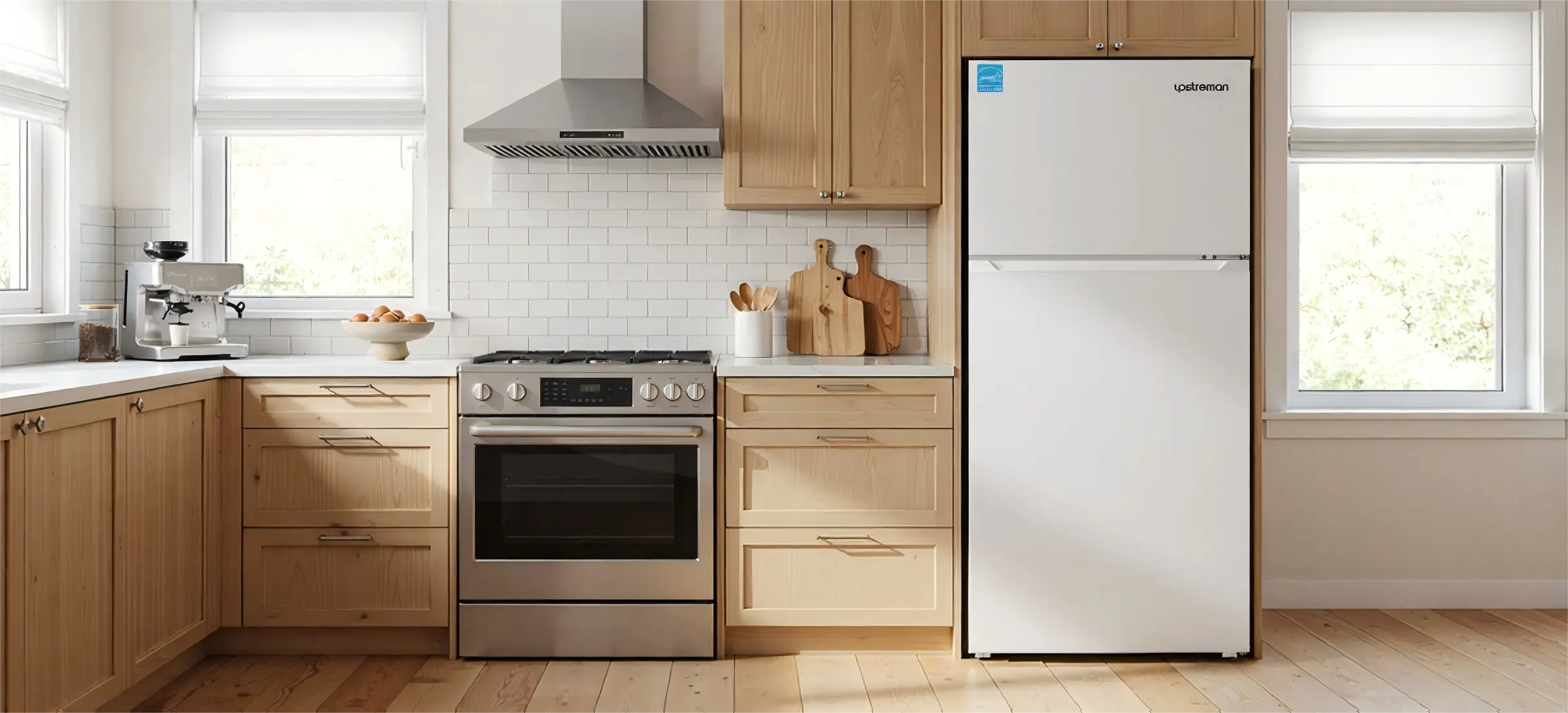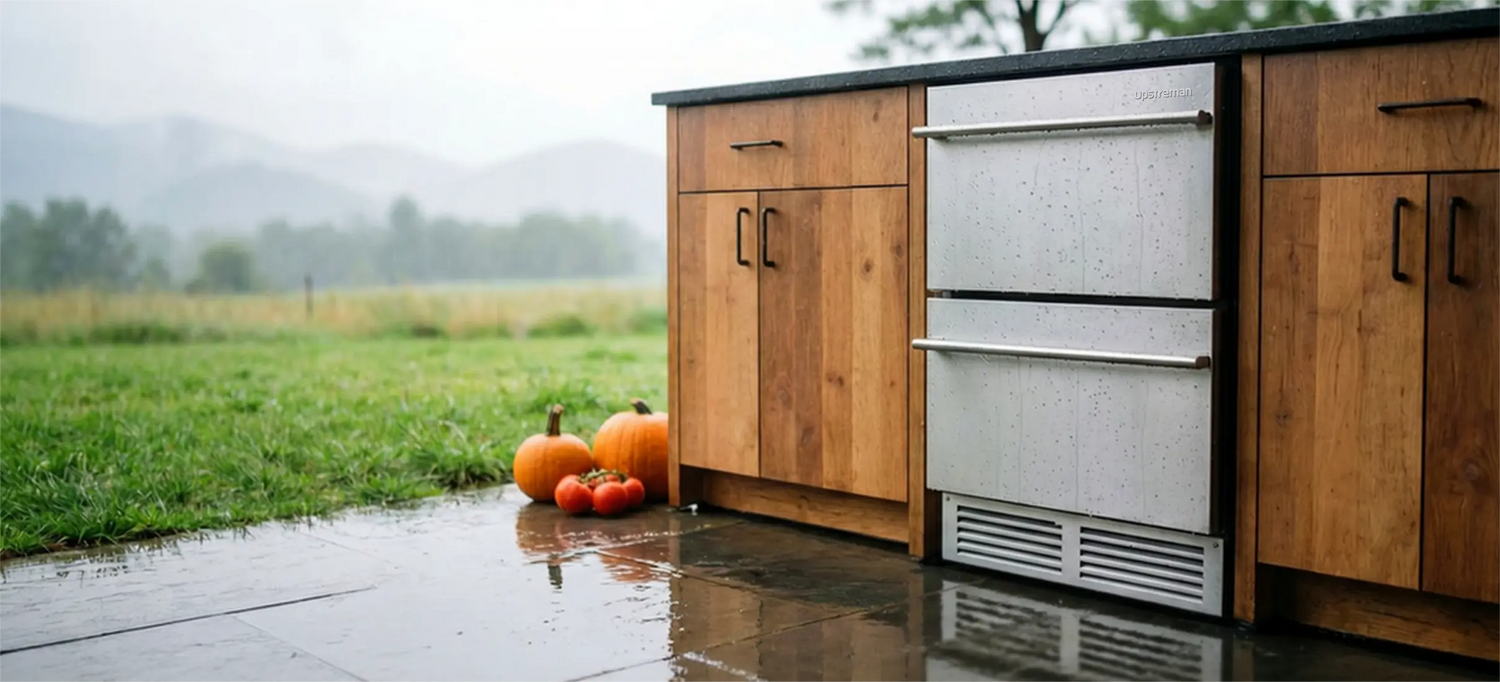
Most refrigerators use between 300 and 800 watts, with higher startup power when the compressor kicks in. Smaller models like drawer refrigerators and mini fridges use significantly less energy, making them ideal for efficient or backup power scenarios.
How Many Watts Does a Refrigerator Draw?

When the power goes out or you're planning a backup energy setup, one of the first questions is:
how much electricity does a refrigerator actually use?
The answer depends on the size, design, and usage of your fridge — but understanding the basics can help you estimate costs, choose the right appliance, and avoid power overloads.
Average Wattage of a Refrigerator
Most household refrigerators run on:
- 300 to 800 watts (running power)
- 800 to 1200 watts (startup surge)
The startup wattage is higher because the compressor needs extra energy to begin cooling.
👉 This is especially important if you're using:
- generators
- portable power stations
- solar backup systems
How to Calculate Refrigerator Power Consumption
To estimate your refrigerator’s wattage:
Formula:
Watts = Volts × Amps
In most U.S. homes:
- Voltage = 120V
- Amps = 3–6A
So:
- 120 × 3 = 360W
- 120 × 6 = 720W
👉 That’s why most refrigerators fall into the 300–800W range.
📌 Tip:
You can find your fridge’s exact rating on the manufacturer label inside the door or back panel.
Power Usage by Refrigerator Type
Not all refrigerators consume the same amount of energy.
Full-Size Refrigerators
- 400–800W
- Large capacity, higher consumption
Mini Fridges
- 50–150W
- Compact, lower power usage
Drawer Refrigerators
- 100–250W
- Built-in, compact cooling zones
👉 Because they cool smaller compartments and reduce cold air loss,
drawer refrigerators are typically more energy-efficient than traditional models.
Why Drawer Refrigerators Use Less Energy?
Several design factors contribute to lower power consumption:
1. Smaller Cooling Space
Less volume = less energy required
2. Reduced Air Loss
Opening drawers releases less cold air compared to full doors
3. Targeted Cooling
Better temperature control for specific items
👉 This makes them ideal for:
- kitchen islands
- home bars
- secondary refrigeration
How Much Electricity Does a Refrigerator Use Per Day?
To estimate daily usage:
- Average: 1–2 kWh per day
- Monthly: 30–60 kWh
👉 Smaller units like drawer refrigerators can reduce this further.
Can You Run a Refrigerator on Backup Power?
Yes — but you need to consider both:
- Running watts
- Startup watts
Best options for backup scenarios:
- Mini fridges
- Drawer refrigerators (lower surge + stable load)
👉 Larger refrigerators require more powerful generators.
How to Reduce Refrigerator Power Consumption
- Keep the door closed as much as possible
- Maintain proper airflow behind the unit
- Avoid overloading
- Choose energy-efficient models
👉 Upgrading to smaller or specialized units like drawer refrigerators can significantly reduce energy use.
Is a Drawer Refrigerator a Good Energy-Efficient Choice?
If your goal is lower electricity usage + modern design, the answer is yes.
They are best suited for:
- secondary storage
- small households
- design-focused kitchens
👉 While they don’t replace full-size fridges entirely,
they offer a highly efficient supplemental solution.
FAQ
How many watts does a refrigerator use per hour?
Most refrigerators use 300–800 watts while running, depending on size and efficiency.
What is the startup wattage of a refrigerator?
Typically 2–3 times higher than running watts, around 800–1200W.
Do smaller refrigerators use less electricity?
Yes. Compact models like mini fridges and drawer refrigerators consume less energy.
Are drawer refrigerators worth it?
They are ideal for energy efficiency, convenience, and modern kitchen layouts.
Which Option Is Most Energy Efficient?
👉 Best: drawer refrigerator
👉 Moderate: mini fridge
👉 Highest consumption: full-size fridge
Explore energy-efficient refrigerators for modern kitchens.